
Arsitektur Hidrosol
Kimia Mendalam, Keamanan, dan Keajaiban Distilasi
Dari taman-taman Persia abad ke-10 hingga formula krim ideal Anda. 16 pelajaran kimia mendalam.
Instalment payments
The author about the course
Oksana Walker explains what is inside the course, who it suits and what result you get
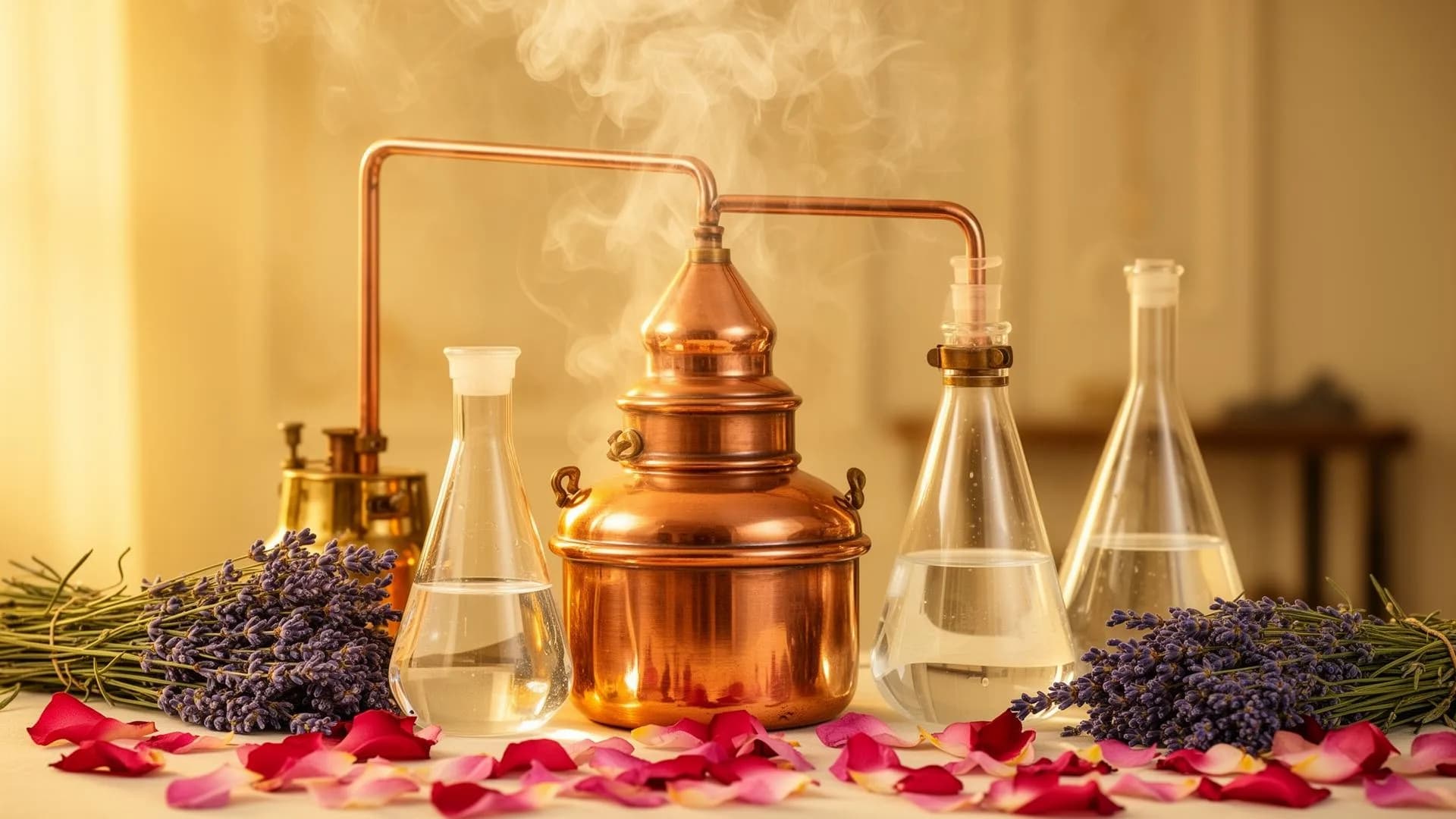
From petal to formula
Every hydrolat begins with the careful gathering of raw material
Do you know what is inside your hydrosol?
A hydrosol is not "scented water". It is a complex chemical matrix in which 0.02% of organic molecules create the magic of its effect on the skin. But how do you tame that magic and make it predictable and safe?
A hydrosol ≠ diluted essential oil
It is an active in its own right, with a unique pH and water-soluble components that are NOT present in the essential oil. Most fellow formulators are unaware of this.
99% water = 99% risk
Hydrosols are 99% water, which means they are vulnerable to microbiological contamination. Without proper preservation your product can become dangerous.
Every degree matters
Steam temperature, distillation time, the quality of the raw material — everything affects the therapeutic profile. Without systematic knowledge the result is a lottery.
This course gives you a complete system: from molecular understanding to hands-on distillation and multi-barrier protection.
This course is for you if...
For you
- You make cosmetics and want to be 100% certain of the purity of your ingredients
- You already work with hydrosols but want to understand their chemistry at the molecular level
- You distil, or plan to start — and want to do it properly
- You are ready to go beyond simple recipes and master a technology where every degree and every unit of pH matters
- You want to learn to preserve hydrosols and control their stability
Perhaps not for you yet
- You have never tried formulating
→ start with the free Your First Cream or "Formulation Foundation" - You need a general overview of cosmetic chemistry
→ take a look at "Cosmetic Chemistry"
You can take the course without any prior preparation, but those already familiar with the basic concepts of cosmetic chemistry will get the most out of it.
A journey from alchemy to science
The course will take you on a path that will make you look at every millilitre of distillate in a new way
Stage 1 — Alchemy and history
Why the ancient Persians considered distillation the “extraction of the soul”
An immersion in history: from the Persian gardens of the 10th century, through medieval alchemy, to modern perfumery. The context that turns a craft into an art.
Stage 2 — Deep chemistry
Breaking down the composition at the molecular level
Why a hydrosol is an active in its own right, not a “diluted essential oil”. Water-soluble components, a unique pH, 0.02% organic molecules.
Stage 3 — The art of distillation
How the physics of steam and the temperature of the flame determine the result
The influence of process parameters on the therapeutic profile. Equipment — from a kitchen pan to a professional alembic.
Stage 4 — Application and experiments
From cosmetics to the most unusual distillations in the world
You will discover 40+ ways to use hydrosols: cosmetics, aromatherapy, cooking. You will learn about the most unconventional candidates for distillation.
Stage 5 — A manifesto of safety
Multi-barrier protection — from sterilisation to 10 golden rules
99% water = vulnerability. Learn to understand contamination and build a protection system: sterilisation, preservation systems, a step-by-step protocol.
Stage 6 — Practice
Your first distillation — from preparation to the finished product
Two distillations: a professional one on a still and an accessible DIY one in the kitchen. A distillation journal and pH control.
Course programme
16 lessons · 6 modules · From the basics to practice
🎓 On completing the course there is a final assessment and an electronic official certificate from Walker Formulation Academy.
Enrol on the courseWhat you will be able to do after the course
You will know
- The chemical composition of hydrosols at the molecular level
- The difference between a hydrosol, an essential oil and a floral water
- The physics of steam distillation: pressure, temperature, azeotropes
- The therapeutic profiles of 15+ plants
- The microbiology of aqueous systems and the causes of spoilage
- Preservation systems and the 10 golden rules of preservation
You will be able to
- Distil hydrolats yourself — from preparation to collection
- Choose and set up equipment (from a pan to an alembic)
- Control the process parameters to achieve the result you want
- Assess the quality of a hydrolat: organoleptics, pH, stability
- Preserve hydrolats and ensure their long-term storage
- Keep a laboratory journal and track pH dynamics
- Use hydrolats competently in cosmetic formulas
Course author and instructor
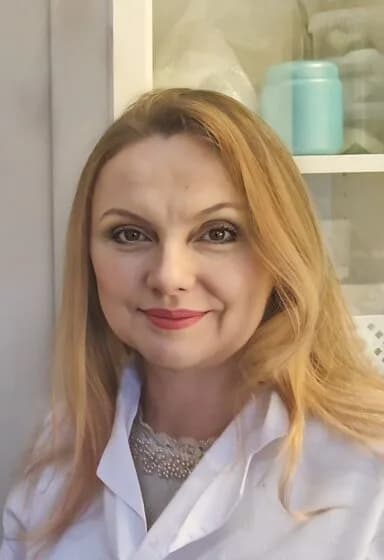
Oksana Walker
Penulis kursus, pakar utama di Walker Formulation Academy
Oksana Walker adalah ahli kimia kosmetik praktisi dengan sertifikasi internasional. Ia adalah penulis seluruh program di Walker Formulation Academy. Kursus 'Arsitektur Hidrosol' merupakan hasil kajian mendalam tentang sejarah, kimia, dan praktik distilasi.
Hidrosol adalah bidang di mana sains dan alam bekerja selaras. Saya ingin menunjukkan kepada Anda cara mengubah 'air beraroma' menjadi bahan aktif yang dapat diprediksi, aman, dan efektif untuk formula Anda.
What sets this course apart
From alchemy to the laboratory
Historical context that gives depth of understanding. You will learn WHY distillation works the way it does and not otherwise.
Chemistry at the molecular level
Not "lavender is relaxing", but specific water-soluble components, their concentrations and mechanisms of action.
A manifesto for safety
Two full lessons on preservation — no other hydrosol course devotes this much attention to safety.
Systematic control
A lab journal, pH dynamics, protocols — you control quality rather than relying on luck.
The plants you will study
Three groups of raw material — from the classics to experiments
Flowers
Herbs
Trees and citrus
Course format
Video lessons
12 detailed video lectures with clear demonstrations
At your own pace
Recorded lessons — learn whenever it suits you
Hands-on distillation
A full practical lesson with a step-by-step video demonstration
IFSCC expert
A teacher with international certification
Support
Teacher and coordinator on hand
Certificate
Official certificate from Walker Formulation Academy
Choose your plan
Start learning right now
Frequently asked questions
Where the course fits in your learning
Ciptakan bahan aktif di mana sains dan alam bekerja selaras
16 pelajaran dari alkimia hingga praktik laboratorium — jalan Anda menuju hidrosol profesional
Flexible payment plans · Official certificate